
AI vs. Vibe Coding: A Deep Dive into Two Emerging Programming Paradigms
The world of software development is in constant flux, driven by innovation and a relentless pursuit of efficiency. Two concepts, AI-assisted coding (often referred to as “AI coding”) and vibe coding, are currently generating considerable buzz and debate. While both aim to make the coding process easier and more intuitive, they approach the problem from vastly different angles. This article will dissect these two concepts, comparing and contrasting their methodologies, strengths, weaknesses, and potential impact on the future of software development. We’ll explore the core philosophies behind each, examine the tools and techniques involved, and ultimately, help you understand which approach might be a better fit for your needs.
Understanding AI-Assisted Coding (AI Coding)
AI-assisted coding, or AI coding, isn’t about replacing human programmers. Instead, it leverages the power of artificial intelligence, particularly large language models (LLMs) like GPT-3, Codex, and others, to augment and accelerate the development process. The core idea is that AI can handle repetitive, tedious, and rule-based tasks, freeing up developers to focus on higher-level design, problem-solving, and strategic thinking.
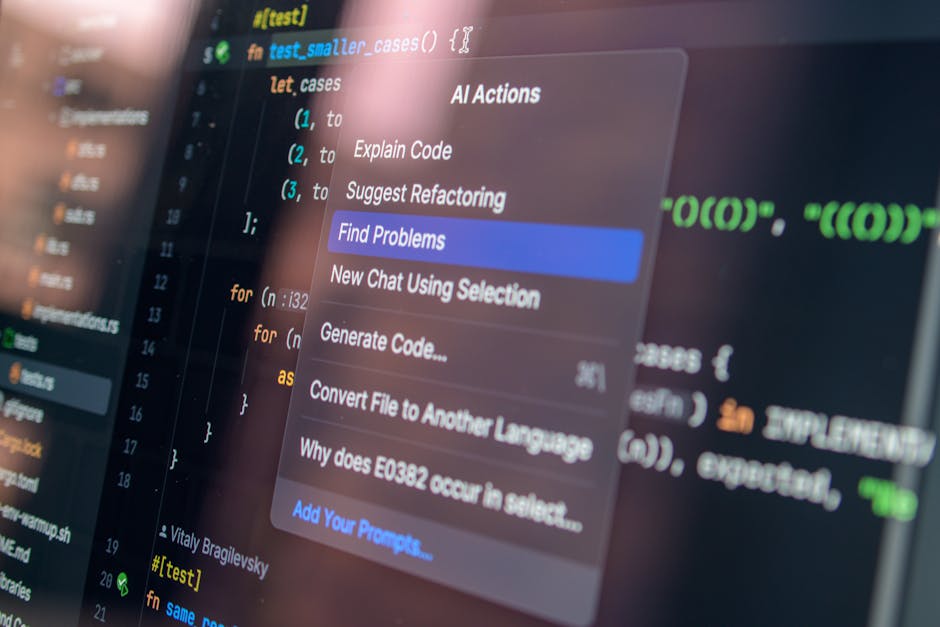
Currently, most AI coding tools operate through a conversational interface. Developers interact with the AI, providing prompts – often in the form of natural language – describing what they want to achieve. The AI then generates code snippets, entire functions, or even complete applications based on these prompts. The process is iterative; developers refine the prompts, the AI generates revised code, and this cycle continues until the desired outcome is reached.
Several key technologies underpin AI coding:
- Large Language Models (LLMs): These are the engines driving the AI’s code generation capabilities. Trained on massive datasets of code and natural language, they can understand code intent and generate similar code.
- Code Completion Tools: These are more basic versions of AI coding tools, often integrated directly into IDEs (Integrated Development Environments) like VS Code or IntelliJ, providing suggestions as you type.
- Code Synthesis Tools: These tools aim to translate natural language descriptions into executable code, offering a more direct approach to AI-driven development.
Strengths of AI Coding:
- Increased Productivity: AI can automate repetitive tasks, significantly reducing development time.
- Reduced Errors: AI can generate code based on precise specifications, minimizing human error.
- Lower Barrier to Entry: AI coding tools can help novice programmers learn and develop code more effectively.
- Rapid Prototyping: Quickly generate prototypes and experiment with different design options.
Weaknesses of AI Coding:
- Dependence on Prompts: The quality of the generated code heavily relies on the clarity and specificity of the prompts. Poorly formulated prompts can lead to inaccurate or inefficient code.
- Lack of Understanding: AI doesn’t truly *understand* the underlying logic or intent of the code. It’s generating code based on patterns it has learned, not based on a deep comprehension.
- Security Risks: AI-generated code can contain vulnerabilities if the AI hasn’t been properly trained or if the prompts are exploited.
- Bias and Fairness: AI models can inherit biases from the data they were trained on, leading to biased or unfair code.
Understanding Vibe Coding
Vibe coding is a more philosophical and experimental approach to software development, rooted in the concept of “flow” and intuitive coding. It emphasizes minimizing cognitive load and allowing developers to enter a state of heightened creativity and focus – often described as “flow.” Unlike AI coding, which relies on algorithms and data, vibe coding relies heavily on intuition, experimentation, and a deep understanding of the problem domain.
The core principles of vibe coding include:
- Minimalist Syntax: Employing extremely concise and expressive syntax to reduce cognitive overhead.
- Visual Programming: Using visual representations of code, such as diagrams or sketches, to aid understanding and facilitate brainstorming.
- Embodied Cognition: Recognizing the importance of the developer’s physical and mental state in the coding process.
- Contextual Awareness: Maintaining a deep understanding of the problem domain and the user’s needs.
Vibe coding often involves utilizing domain-specific languages (DSLs) or specialized tools designed to promote intuitive interaction. Some proponents advocate for using unconventional programming languages or even visual programming environments where developers can directly manipulate data structures and algorithms visually. The focus is not on producing perfectly optimized code, but rather on quickly exploring different solutions and generating ideas.
Strengths of Vibe Coding:
- Enhanced Creativity: Minimizing cognitive load allows developers to think more creatively and explore unconventional solutions.
- Increased Intuition: By focusing on the “feel” of the code, developers can often discover solutions that would be difficult to find through purely logical analysis.
- Reduced Stress: A more relaxed and intuitive coding process can reduce stress and improve developer well-being.
- Faster Exploration: Quickly prototype and experiment with different ideas, without getting bogged down in technical details.
Weaknesses of Vibe Coding:
- Lower Productivity (Initially): The intuitive nature of vibe coding can lead to slower initial development times as developers become accustomed to the approach.
- Potential for Technical Debt: Lack of formal design and documentation can lead to technical debt over time.
- Difficult to Scale: Vibe coding is typically best suited for smaller projects or exploratory work.
- Requires Experienced Developers: Successfully implementing vibe coding requires a high level of developer experience and intuition.
AI Coding vs. Vibe Coding: A Comparison
| Feature | AI Coding | Vibe Coding |
|---|---|---|
| Approach | Data-driven, algorithmic | Intuitive, experiential |
| Tooling | LLMs, Code Completion Tools | DSL, Visual Programming Environments |
| Focus | Efficiency, Automation | Creativity, Flow |
| Skillset Required | Prompt Engineering, Basic Coding Knowledge | Deep Domain Knowledge, Intuition |
Ultimately, AI coding and vibe coding represent distinct paradigms. AI coding is a powerful tool for automating repetitive tasks and increasing developer productivity, but it requires careful prompt engineering and a critical understanding of its limitations. Vibe coding, on the other hand, is a more holistic approach that prioritizes developer well-being and creative exploration, although it may not be suitable for all projects. The future of software development is likely to involve a hybrid approach, where AI coding is used to augment human intelligence, and developers leverage their intuition and creativity to solve complex problems.
As both technologies continue to evolve, it’s crucial to understand their strengths and weaknesses, and to use them strategically to achieve the best possible outcomes. The conversation around AI and coding will undoubtedly continue to shift and shape the industry for years to come.