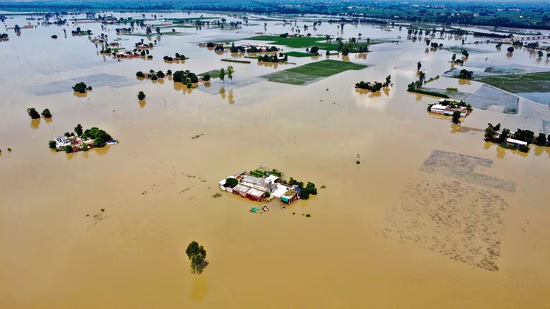
Punjab is currently facing one of its most severe flood crises in recent years. With continuous rainfall and rising river levels, several districts have been inundated, forcing mass evacuations, disrupting daily life, and leading to widespread concerns about safety, infrastructure, and livelihoods.
Rising Water Levels Put Communities at Risk
The relentless monsoon rains have caused rivers like the Sutlej, Beas, and Ghaggar to swell beyond safe limits. As a result, low-lying areas and villages near riverbanks have been submerged, leaving thousands of residents stranded. Authorities have been working tirelessly to relocate affected families to safer locations, setting up temporary shelters and providing relief supplies.
In many places, farmlands have been completely washed away, devastating the agricultural backbone of the state. Punjab, being one of India’s largest food grain producers, is witnessing significant crop losses, raising concerns about long-term food security and the livelihood of farmers.
Schools and Institutions Ordered Shut
To ensure the safety of students, the Punjab government has ordered the closure of schools in severely affected districts until conditions improve. Online classes are being considered as a temporary measure, but connectivity issues in rural flood-hit regions have made implementation difficult.
Colleges and universities in certain areas have also suspended operations, while examinations have been postponed. The disruption in education is adding another layer of difficulty for families already struggling with displacement.
Evacuation and Relief Operations
Rescue teams from the National Disaster Response Force (NDRF), State Disaster Response Force (SDRF), and local administration are actively conducting evacuation drives. Boats and helicopters have been deployed to reach remote villages cut off by floodwaters.
Community halls, schools, and government buildings are being converted into relief camps to shelter displaced people. Authorities are also distributing food, drinking water, and medical aid. However, reports from affected areas indicate shortages of essential supplies, highlighting the need for faster relief distribution.
Transportation and Infrastructure Disruption
The floods have caused significant damage to roads, bridges, and rail tracks, severely impacting transportation. Train services on certain routes have been suspended, and road connectivity between major cities and villages has been disrupted. Power supply in many regions has also been cut off as a precautionary measure, further complicating the crisis.
Health Concerns and Sanitation Issues
Health officials have raised alarms about potential outbreaks of waterborne diseases such as cholera, diarrhea, and dengue. Flooded areas often become breeding grounds for mosquitoes, and lack of clean drinking water is a growing concern. Medical teams are being deployed, but the overwhelming scale of the disaster poses challenges in ensuring proper sanitation and healthcare facilities.
Government Response and Public Appeals
The Punjab government has declared a state of high alert and is working in coordination with central agencies for relief efforts. Chief Minister and district officials have urged people in vulnerable areas to cooperate with evacuation efforts and avoid returning to unsafe locations until water levels recede.
Citizens across India are also being encouraged to contribute to relief funds and donate essential supplies to support ongoing humanitarian efforts.
The Road Ahead
While rescue and relief operations continue, the long-term impact of the floods is likely to be significant. Loss of crops, damage to infrastructure, displacement of families, and disruption of education will require extensive rehabilitation measures in the coming months. Experts also warn that climate change may make such extreme weather events more frequent, highlighting the need for better flood management and disaster preparedness.