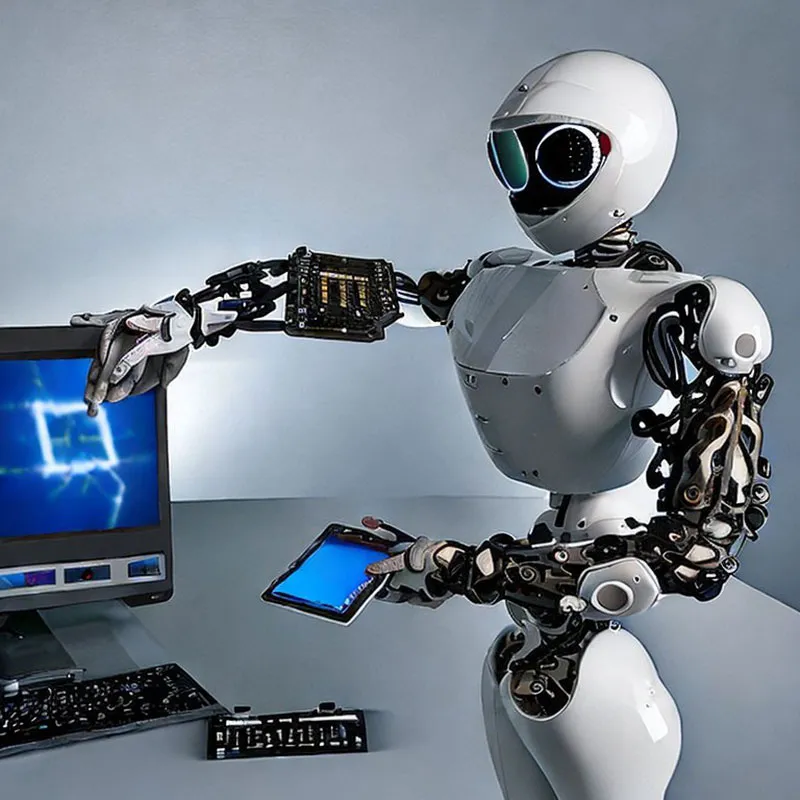

Artificial Intelligence (AI) is transforming the way we live, work, and interact with technology. Once considered a futuristic concept, AI has now become an integral part of our daily lives, from personal assistants like Siri and Google Assistant to autonomous vehicles and smart healthcare solutions. In this article, we’ll explore what AI is, its benefits, the pros and cons, and the future trends that could shape the world.
What is Artificial Intelligence?
Artificial Intelligence refers to the simulation of human intelligence in machines. These machines are designed to think, learn, and make decisions, often mimicking human cognitive functions. AI systems can perform tasks that traditionally required human intelligence, such as problem-solving, understanding natural language, recognizing patterns, and making predictions.
AI can be categorized into:
- Narrow AI (Weak AI): Focused on performing a specific task efficiently. Examples include chatbots, voice assistants, and recommendation systems.
- General AI (Strong AI): Capable of performing any intellectual task that a human can do. This type is still largely theoretical.
- Superintelligent AI: Hypothetical AI that surpasses human intelligence across all domains.
Key technologies that power AI include:
Robotics: Combines AI with mechanical systems for automation and intelligent action.
Machine Learning (ML): Enables systems to learn from data and improve over time.
Deep Learning: A subset of ML that uses neural networks to process complex data like images, videos, and speech.
Natural Language Processing (NLP): Allows machines to understand, interpret, and respond to human language.
Computer Vision: Enables machines to analyze and interpret visual information.
How AI Benefits Society
AI is revolutionizing industries and improving efficiency in multiple domains:
Education & Learning: AI provides personalized learning experiences and automated grading, helping students learn more effectively.
Automation of Tasks: AI can handle repetitive, time-consuming tasks such as data entry, customer support, and manufacturing processes.
Enhanced Decision-Making: AI analyzes large datasets quickly, helping businesses and governments make informed decisions.
Healthcare Innovations: AI assists in disease diagnosis, personalized treatments, drug discovery, and medical imaging analysis.
Improved Customer Experiences: AI-powered chatbots, virtual assistants, and recommendation engines personalize user interactions.
Predictive Capabilities: AI predicts trends in finance, weather, and supply chains, helping organizations plan effectively.
Transportation & Logistics: AI powers autonomous vehicles, traffic management systems, and route optimization for faster deliveries.
Pros of Artificial Intelligence
AI offers numerous advantages that make it a valuable technology:
Safety: In hazardous industries like mining, nuclear power, and space exploration, AI reduces human risk.
Efficiency & Productivity: AI works 24/7 without fatigue, increasing operational efficiency.
Accuracy: Properly trained AI can outperform humans in tasks like image recognition, pattern detection, and calculations.
Cons of Artificial Intelligence
Despite its potential, AI also comes with challenges:
- Job Displacement: Automation may replace certain human jobs, affecting livelihoods in various sectors.
- Bias & Ethical Concerns: AI can inherit biases from training data, leading to unfair outcomes.
- High Costs: Developing and maintaining AI systems can be expensive.
- Over-Reliance: Excessive dependence on AI may reduce human critical thinking and problem-solving.
- Security Risks: AI can be misused for cyber attacks, surveillance, or creating deepfakes.
- Privacy Issues: AI applications often require large amounts of personal data, raising privacy concerns.
The Future of AI
The future of AI is full of exciting possibilities:
- AI in Healthcare: Advanced AI could lead to early disease detection and fully automated medical procedures.
- AI in Business: Predictive analytics, smart supply chains, and AI-driven decision-making will dominate business strategy.
- AI Ethics & Regulations: Governments and organizations are focusing on creating ethical AI frameworks to prevent misuse.
- Human-AI Collaboration: AI will increasingly augment human capabilities rather than replace them.
- Emergence of General AI: While still theoretical, General AI could revolutionize human life in ways we can only imagine.
Conclusion
Artificial Intelligence is a groundbreaking technology that has the potential to reshape every aspect of our lives. While it offers immense benefits in terms of efficiency, innovation, and problem-solving, it also poses challenges such as ethical dilemmas, job displacement, and security concerns. By understanding AI’s capabilities and limitations, we can leverage this technology responsibly to create a smarter, more efficient, and inclusive future.
Scalability: AI can process massive amounts of data without additional resources.
Innovation: AI enables the creation of new products, services, and business models.